
What Happens to Your Client's Data After They Sign Consent Forms
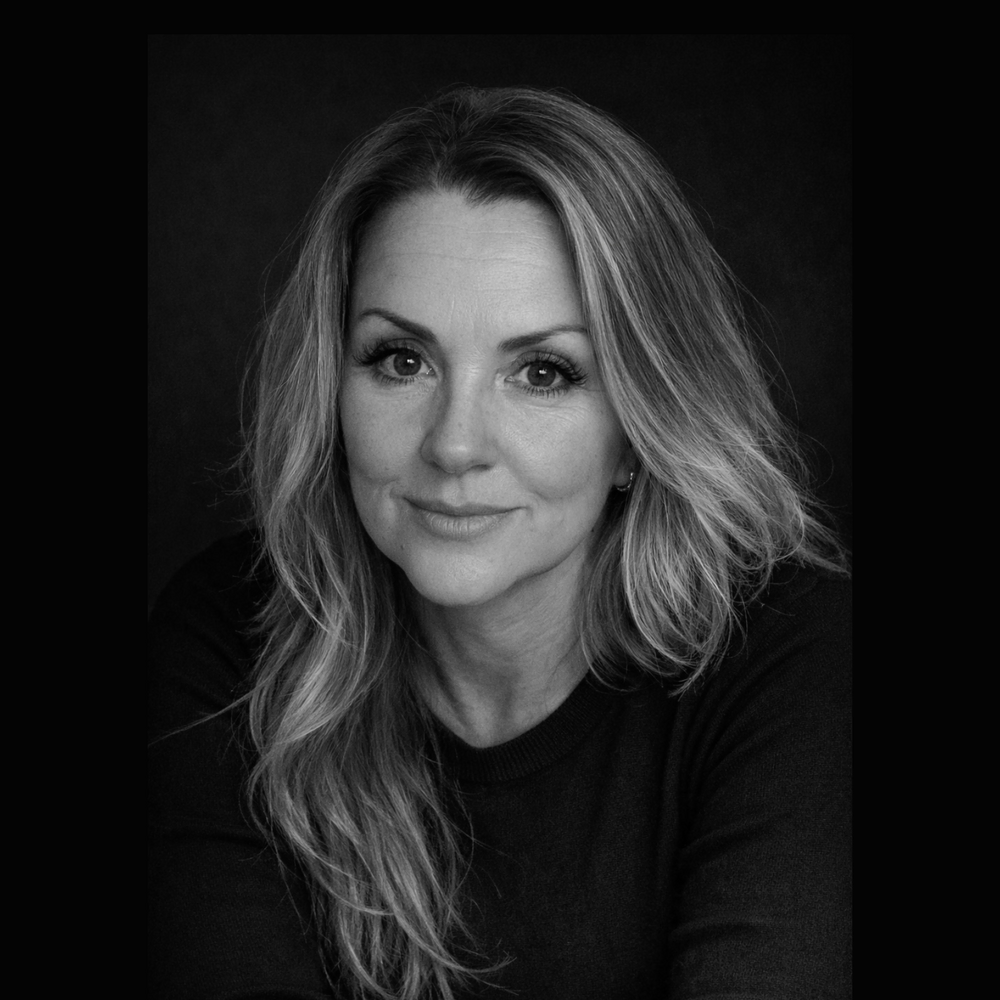
Episode 7 of Trust by Design, After the Signature, premiering now
🎥 Watch on YouTube: https://youtu.be/eWVvCVSWf9k
The Signature at the Start
Your client's name is gone, but their record is still findable, and it may be helping to train AI. It starts with a signature. Somewhere today, a new client is signing a consent form. The counsellor files it, and the work begins.
Earlier this year, the Canadian Counselling and Psychotherapy Association invited me to speak. The theme was Connection: Human Care in the Age of Technology, and the session became Beyond the Hype: Human Connection, Equity, and Clinical Judgment in an AI-Shaped Future
The future the session was named for appears to be here already. AI is in the room.
Episode 7 of Trust by Design, After the Signature, begins with that consent form and asks what happens to a client's information once it is signed.
Cleared to Travel, Still Easy to Match
In Episode 6, names, birthdates and addresses came off a record, and it was cleared to travel. It can sound as though the record has been set loose, belonging to no one.
There is a way to keep finding it, and most of us already use it. When a phone taps to pay, the store sees a stand-in code, never the card number. That is tokenization. Health data uses the same idea: a person's identifying details become a coded token, and the same person produces the same token in any dataset. Records from a hospital, a pharmacy and a lab can then be matched without anyone seeing the person's name.
During the pandemic, one research database used tokens like these to bring together records on more than 300 million patients.
So de-identified does not necessarily mean unlinkable. Today's records also carry far more than demographics: visit dates, diagnoses, transcripts, AI-generated summaries and risk scores. And linked records are increasingly used to train, test and shape what AI models predict about the next person.
What the Record Inherits, and What It Leaves Behind
For therapists, the consent conversation is part of the alliance. It is often where a client learns what will happen with their story, and decides how much of it to tell.
Each time a record is linked and composed, it seems to carry everything forward: the risk scores, the diagnoses, the notes, even the errors. In the Clinical Data Governance Community, what forms is called a Digital Subject Representation. It is a version of a person, built from health information and metadata, that can be used as a stand-in for a test subject, without the rights or protections a research participant would have.
What it does not appear to inherit is the promise: what the client was told, what they agreed to, and who they trusted with their story. The episode asks why identifiers are checked before a record leaves, yet what it becomes after it arrives is rarely checked at all.
Architecture Close By
The bridge in this episode may already be on your phone. Self-sovereign identity places credentials in a digital wallet that the person holds, so they decide what to share, with whom and when. In 2025, the World Wide Web Consortium made verifiable credentials an official web standard. In British Columbia, BC Wallet already lets people receive, store and present digital credentials such as permits and licences.
In Canada, the Digital Governance Council is advancing a proposed national standard for patient-controlled verifiable health records, held in wallets that patients control. It is open for stakeholder comment until December 2.
The episode explores why mental health records may be the real stress test for that standard, and asks a question worth bringing into any conversation about consent: if trust can travel inside the record, why not governance too?
The Series So Far
Each episode of Trust by Design finds a gap and looks for the bridges already close by. If Episode 7 is your first, these are the stories it builds on.
Title | What it explores | |
1 | Trust by Design: Gaps and Bridges | Why the series looks for gaps, and for the bridges already close by |
2 | The Record Is No Longer Just a Record | How a health record becomes more than its pages once it is shared and reused |
3 | The Version of You You've Never Met | One counselling note, one misread flag, and a record that travels into AI training |
4 | The Life of a Number After It Leaves You | A PHQ-9 score of sixteen, followed all the way to a data lake |
5 | Openness Before the Incident | What consent forms leave out, and what one platform disclosed only after a data incident |
6 | Take Off the Name, and the Rules Come Off Too | The crossing where identifiers come off, and the story behind the name Trust by Design |
Watch, Listen, Subscribe and Share
Episode 7, After the Signature, premieres on YouTube https://youtu.be/eWVvCVSWf9k
Subscribe and share.
Trust by Design is for anyone who works with health data, builds the systems that use it, or simply cares about what happens to our information once it is de-identified, linked and shared.
Listen and subscribe wherever you get your podcasts:
All episodes: holisticresearchcanada.ca/trustbydesignpodcast
Join the Clinical Data Governance community on Zenodo, where the papers behind this series are published and where you can share your own.
References and Resources
Hansen, C. (2026). When health records become representations of people. Zenodo.
Canadian Counselling and Psychotherapy Association. Counselling and Psychotherapy Month 2026: Connection: Human Care in the Age of Technology.
Datavant. The COVID-19 Research Database and the Future of Tokenized RWD.
Sweeney, L. (2000). Simple Demographics Often Identify People Uniquely. Carnegie Mellon University, Data Privacy Working Paper 3.
W3C (2025). Verifiable Credentials Data Model v2.0. W3C Recommendation, 15 May 2025.
Government of British Columbia. BC Wallet.
Digital Governance Standards Institute (Digital Governance Council). Patient-Controlled Verifiable Health Records and Healthcare Encounter Receipts, proposed National Standard of Canada, open for stakeholder comment until December 2, 2026. Background: Lexpert.


